Slide Background

USA-OWNED · 2026 - 2027 GROUP CLIMBS · $2,400 – $3,200
The mountain doesn't care about your operator. We do.
What

Three routes. Climbers capped at twelve per departure.
98% summit success, calculated across every climb .
Recover with a post-Kilimanjaro Massage.
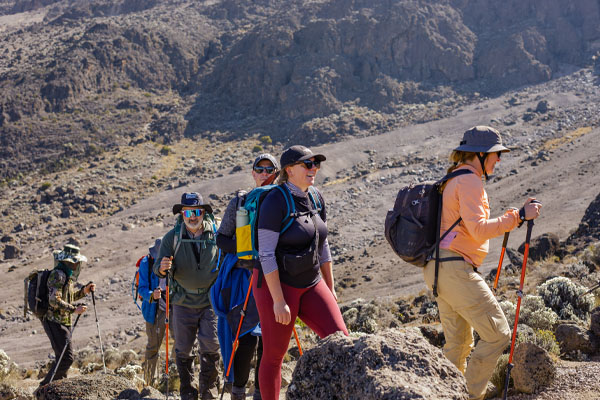
#Group Trekking.

Why We Limit Every Climb to Just 12 Trekkers

At Inspiration Safari, we believe that an exceptional Kilimanjaro experience is built on quality, not quantity. While many operators organize groups of up to 20 climbers, we intentionally limit every expedition to a maximum of 12 trekkers. This smaller group size allows our experienced mountain guides to provide personalized attention, closely monitor each climber’s health and acclimatization, and respond quickly whenever support is needed.

A smaller group also creates a more comfortable trekking environment. You’ll enjoy a relaxed pace, less congestion on the trail, and more opportunities to connect with your guides and fellow adventurers. Our team has the flexibility to adapt the day’s pace to the group’s needs, ensuring everyone has the best possible chance of reaching the summit safely and confidently.

#Route Questions

Popular route on Mt Kilimanjaro trekking

Lemosho Route 8 Days $ 2,600

High summit success rate.

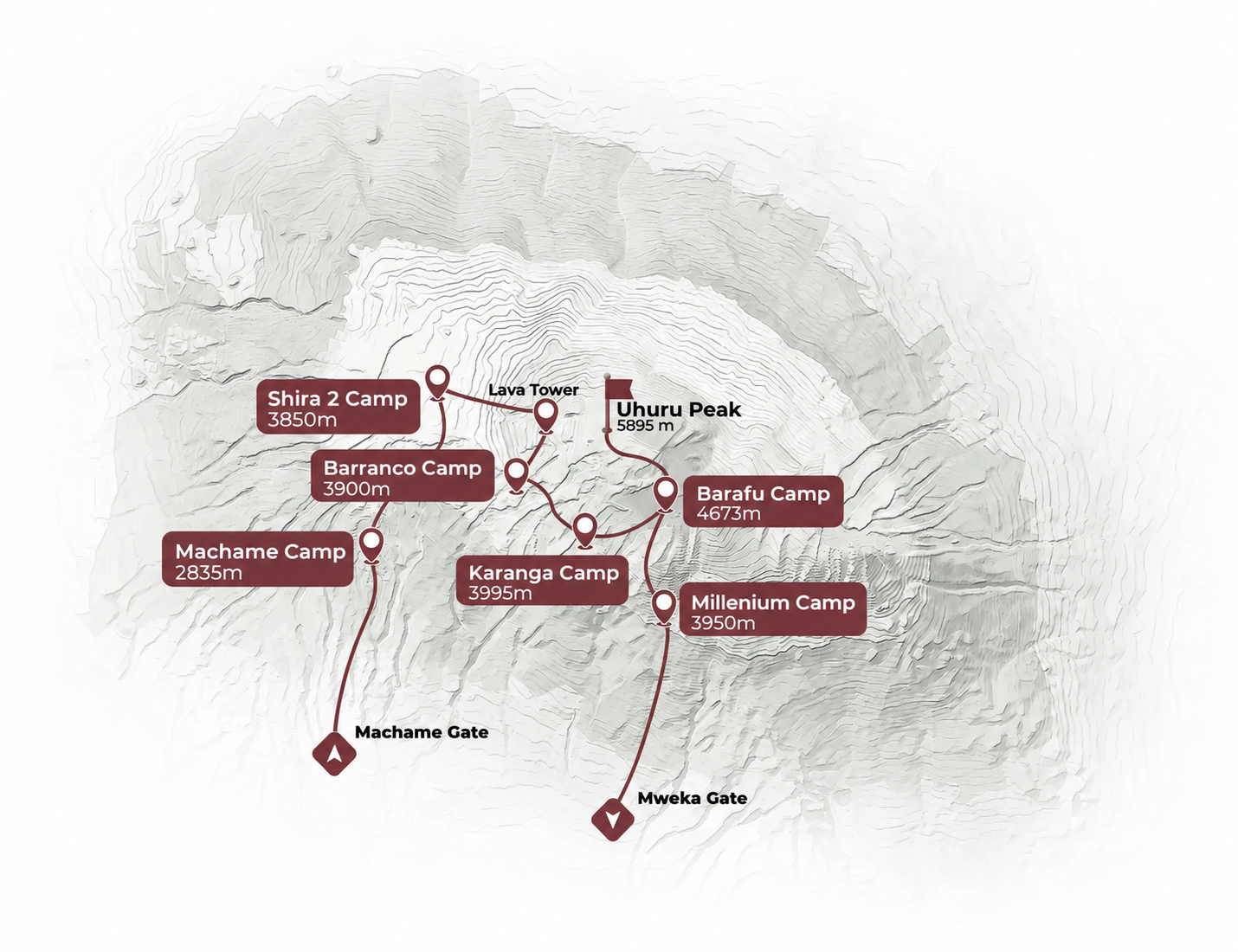
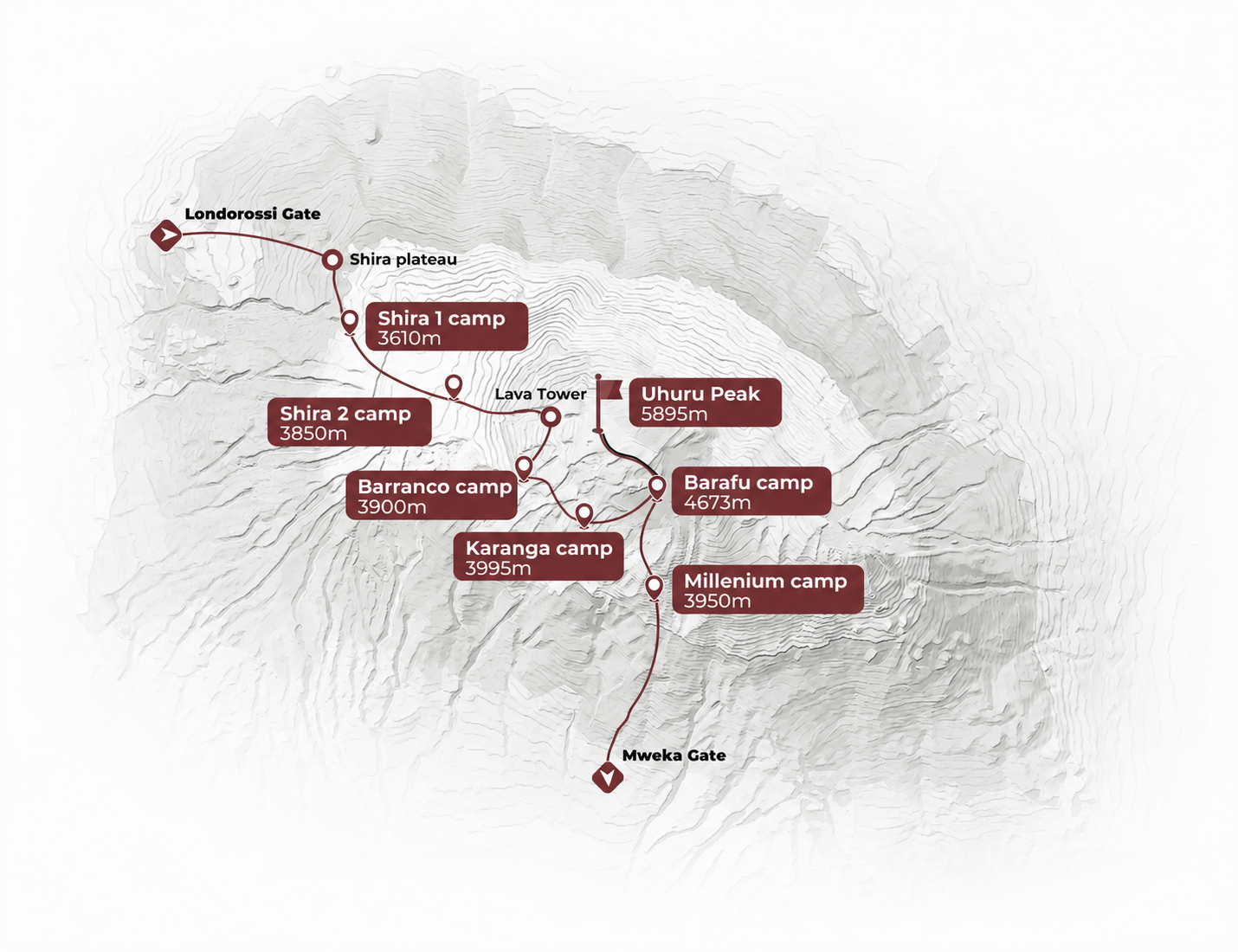
The 8-day Lemosho Route is widely regarded as one of the best ways to climb Mount Kilimanjaro, offering excellent acclimatization, breathtaking scenery, and a high summit success rate. Beginning on the western side of the mountain, this route provides a quieter and more remote start before joining the Machame Route along the way.

Trekkers will pass through diverse landscapes including rainforest, moorland, alpine desert, and the arctic summit zone, making it one of the most scenic and rewarding Kilimanjaro routes.

Whiskey Route

The 7-day Machame Route is one of the most scenic and successful ways to climb Mount Kilimanjaro, Africa’s highest peak at 5,895 meters. Known as the “Whiskey Route,” this itinerary allows more time for acclimatization compared to shorter options, increasing the chances of reaching Uhuru Peak successfully.

This route takes you through diverse landscapes including rainforest, moorland, alpine desert, and the arctic summit zone, offering breathtaking views and a truly rewarding trekking experience.

The 7-day Machame Route is designed for better acclimatization and a more comfortable trekking pace. The extra day allows climbers to adapt gradually to altitude changes, significantly improving summit success rates.

Coca Cola route

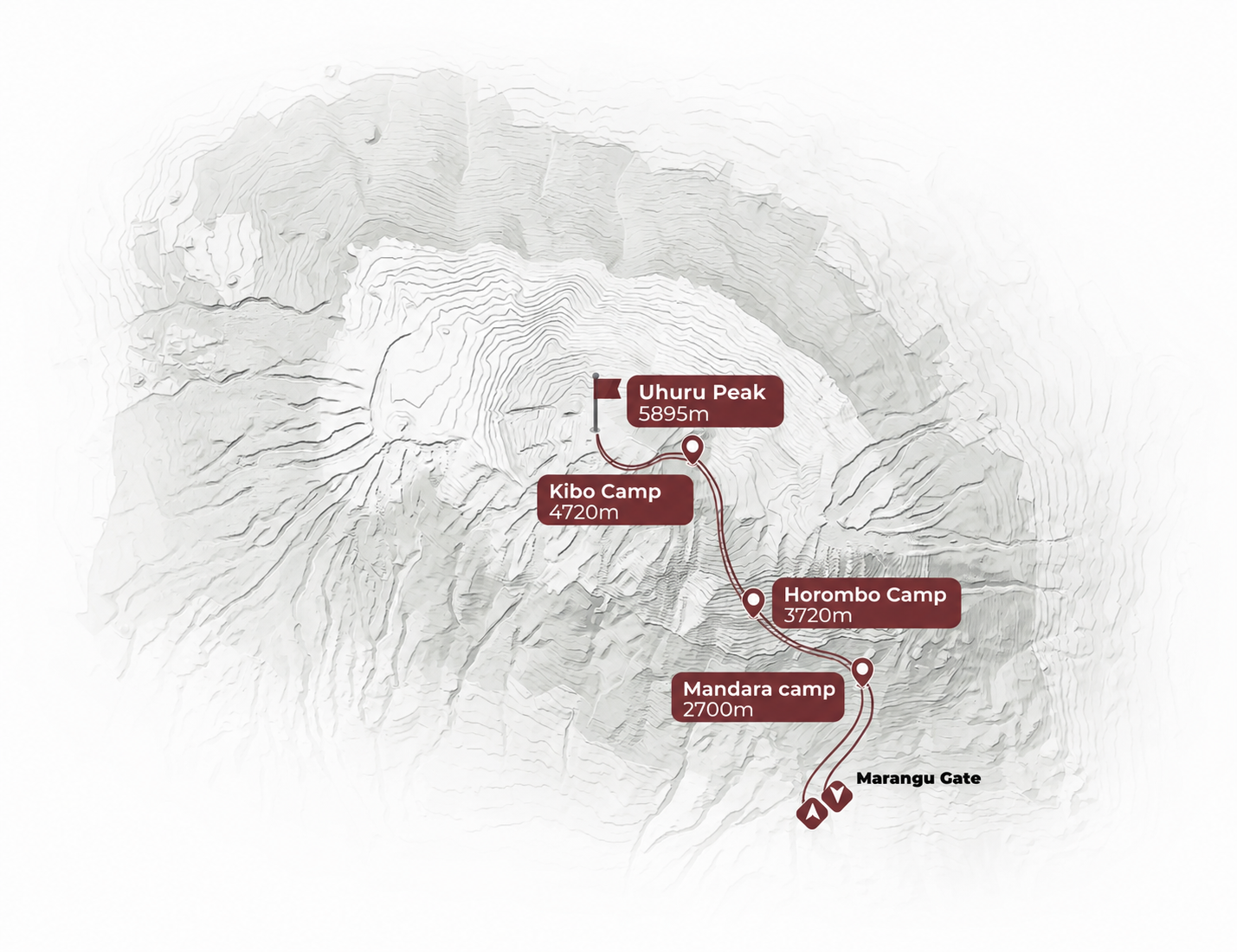
The 6-day Marangu Route is the only route on Mount Kilimanjaro that offers comfortable hut accommodation instead of camping, making it a popular choice for trekkers seeking a more traditional and less rugged climbing experience. Known as the “Coca-Cola Route,” this trail follows a gradual ascent and descent along the same path, passing through beautiful rainforest, moorland, and alpine desert zones before reaching Uhuru Peak at 5,895 meters.

This route is ideal for climbers who prefer sleeping in huts while still experiencing the challenge and reward of summiting Africa’s highest mountain.

The Marangu Route provides a direct and steady approach to the summit of Kilimanjaro. 

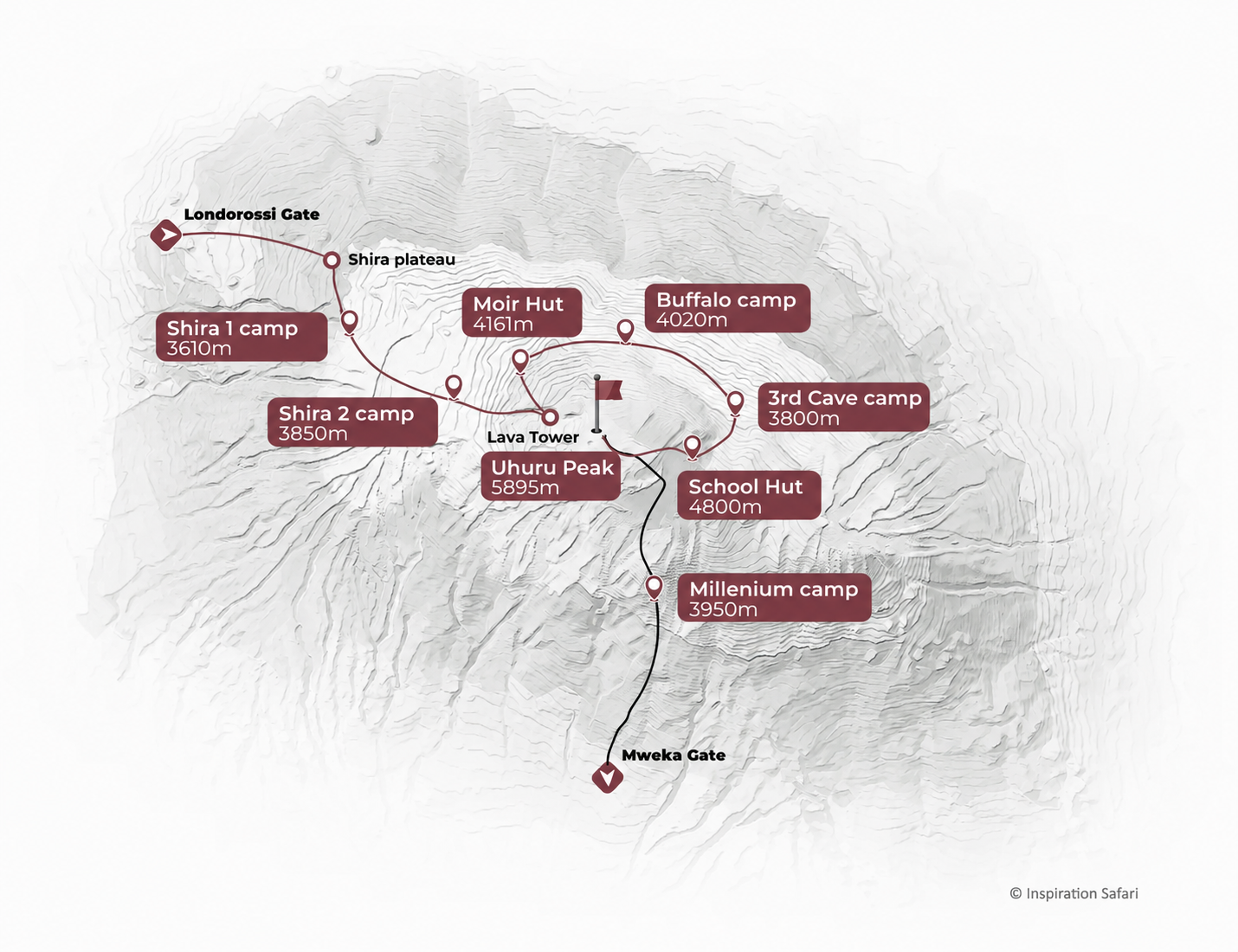
The Northern Circuit is the longest route on Kilimanjaro and the only one that truly circles the mountain. Nine days. Highest acclimatization profile of any route. The lowest number of climbers on the trail by a significant margin. Most of our Northern Circuit departures fill with returning clients and serious alpinists who want the full experience and the highest summit success odds the mountain offers. If you’ve climbed at altitude before, or if you simply want the version of Kilimanjaro fewer than 5% of climbers ever see, this is the route.

TRANSPARENT PRICING

Here's exactly what your money pays for.

UHURU PEAK · 5,895M
ONE PRICE · ZERO SURPRISES

Included in every climb

Everything that happens on the mountain is covered before you arrive.

  • All park, conservation, camping, and rescue fees
  • Professional mountain guides at a 1:2 guide-to-climber ratio
  • Full porter team, carrying gear, tents, and kitchen equipment
  • All meals on the mountain — three hot meals daily, prepared by our mountain chef
  • All tents, sleeping mats, mess tent, dining gear, and toilet tent
  • Filtered drinking water throughout the climb
  • Pulse oximeter monitoring twice daily, plus emergency oxygen on every trip
  • Round-trip airport transfer from Kilimanjaro International (JRO)
  • Two nights of hotel accommodation in Moshi, pre- and post-climb
  • Pre-climb equipment briefing and gear check
  • Summit certificate
PLAN AHEAD FOR THESE

What you'll budget separately

Costs that vary by traveler, so we don't fold them into the climb price.

  • International flights to Kilimanjaro (JRO) $1,200–$1,800
    Typical round-trip from the US
  • Tanzania visa $100
    For US passport holders, applied online
  • Travel & medical insurance Required
    Must include high-altitude evacuation coverage
  • Personal climbing gear $200–$300
    If renting everything — full rental list available
  • Tips for guides, porters & chef $300–$400
    Recommended, per climber
  • Safari or Zanzibar extension Quote on request
    Optional 3–7 day add-on — ask us for pricing

No hidden fees, no surprise add-ons at basecamp — just the two lists above.

Special Offer Join a Kilimanjaro Group & Save Up to $400

Experience the adventure of a lifetime while enjoying incredible savings. Book one of our scheduled Kilimanjaro Join Group Departures and save up to $400 on selected routes and travel dates. Our small-group climbs include professional mountain guides, quality camping equipment, delicious meals, park fees, airport transfers, and full support from an experienced local crew. It’s the perfect opportunity to conquer Africa’s highest peak, meet fellow adventurers.

✔ Save up to $400 on selected departures
✔ Small groups of up to 12 trekkers
✔ Guaranteed departures
✔ Expert local guides & high summit success rate
✔ Limited-time offer  Reserve your spot today!

What climbing Kilimanjaro with us actually feels like.

01  The first day will feel surprisingly easy.

You start in dense rainforest, the air is humid and warm, the trail is well-graded, and the altitude isn’t yet a factor. This is by design. The mountain eases you in. Many climbers worry they’re not pushing hard enough on day one. They are. The next five days do the work.

02  Pole, pole.

Your guides will say this hundreds of times: pole, pole. Slowly, slowly. The Swahili instruction to walk at a deliberate, breathing-room pace is not a suggestion. It’s the single most important variable in whether you summit. American climbers, especially fit ones, struggle with this more than anyone. Trust the pace.

03  Eating becomes the hardest part.

Above 13,000 feet, your appetite vanishes. Our chef will still serve three hot meals a day and you’ll need to eat them anyway  calories are how you make the summit. The chef adjusts portions and salt levels to altitude-affected appetites. Take this seriously. Climbers who don’t eat don’t summit.

04  Summit night is its own thing.

You leave high camp around midnight. The next six hours are slow, cold, dark, and at the very edge of what you’ll be willing to do. Then sunrise hits the glaciers and you remember why you came. The descent that follows is fast and tough on the knees. Most climbers cry at least once on summit morning. This is normal.

Twice-daily health checks. Bottled oxygen on every climb. Evacuation plan before we leave the gate.

We don’t market on fear. But we do answer the safety question honestly because it’s the one question that should never be vague.

Daily medical monitoring

Every climber’s pulse oximetry and resting heart rate are checked twice daily by the lead guide  morning and evening. Trends matter more than single readings. If a climber’s numbers drift toward danger, we adjust the climb. We don’t push.

Equipment we carry on every climb

Evacuation procedure

If a climber needs to descend urgently, an assistant guide and porter accompany them down by foot to the trailhead. From there: vehicle to AMREF or KCMC hospital in Moshi (60-90 minutes). For severe cases: helicopter evacuation coordinated through Kilimanjaro Search and Rescue (we’ll discuss insurance requirements in your briefing).

error: Content is protected !!